
Project overview
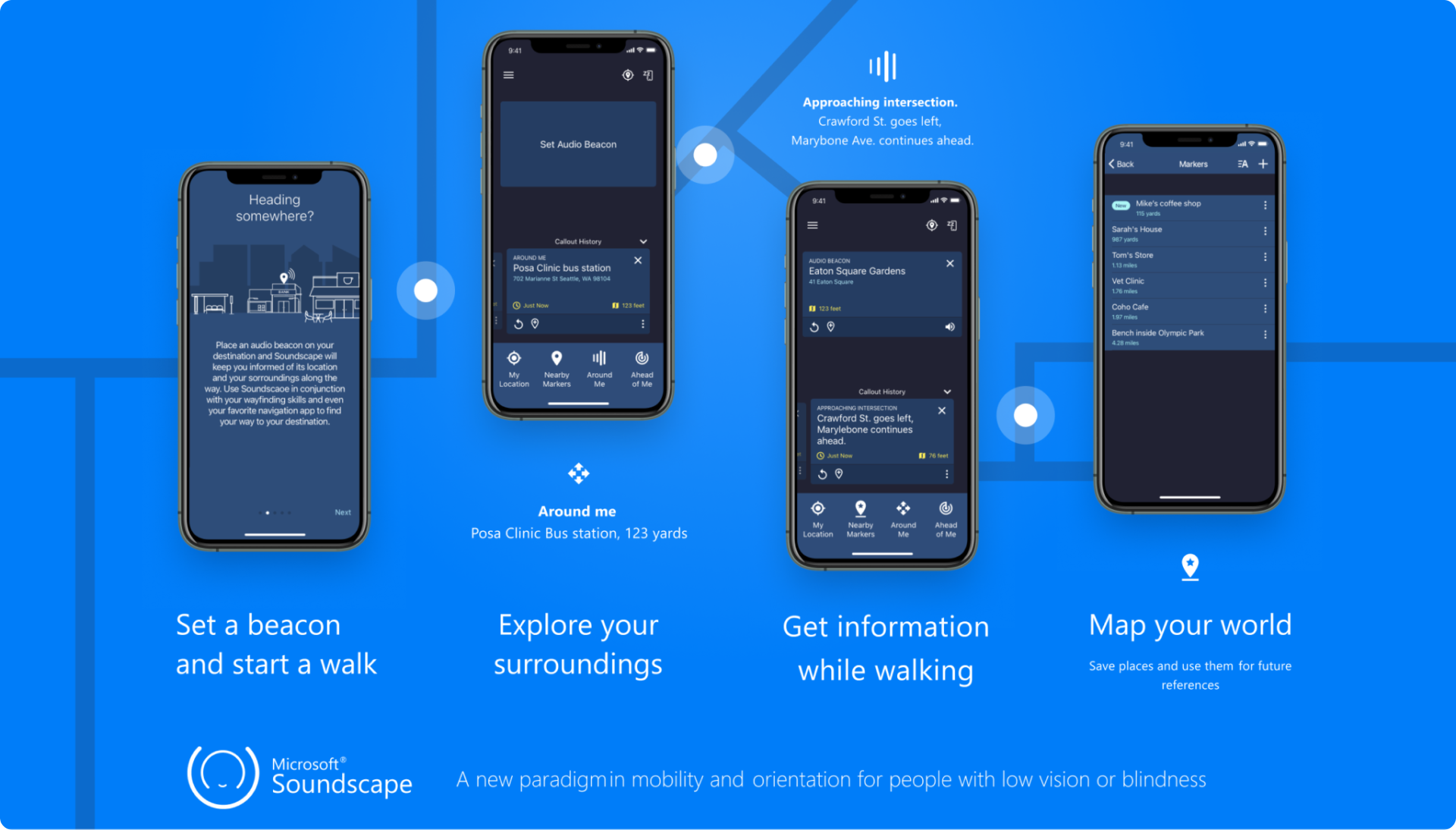
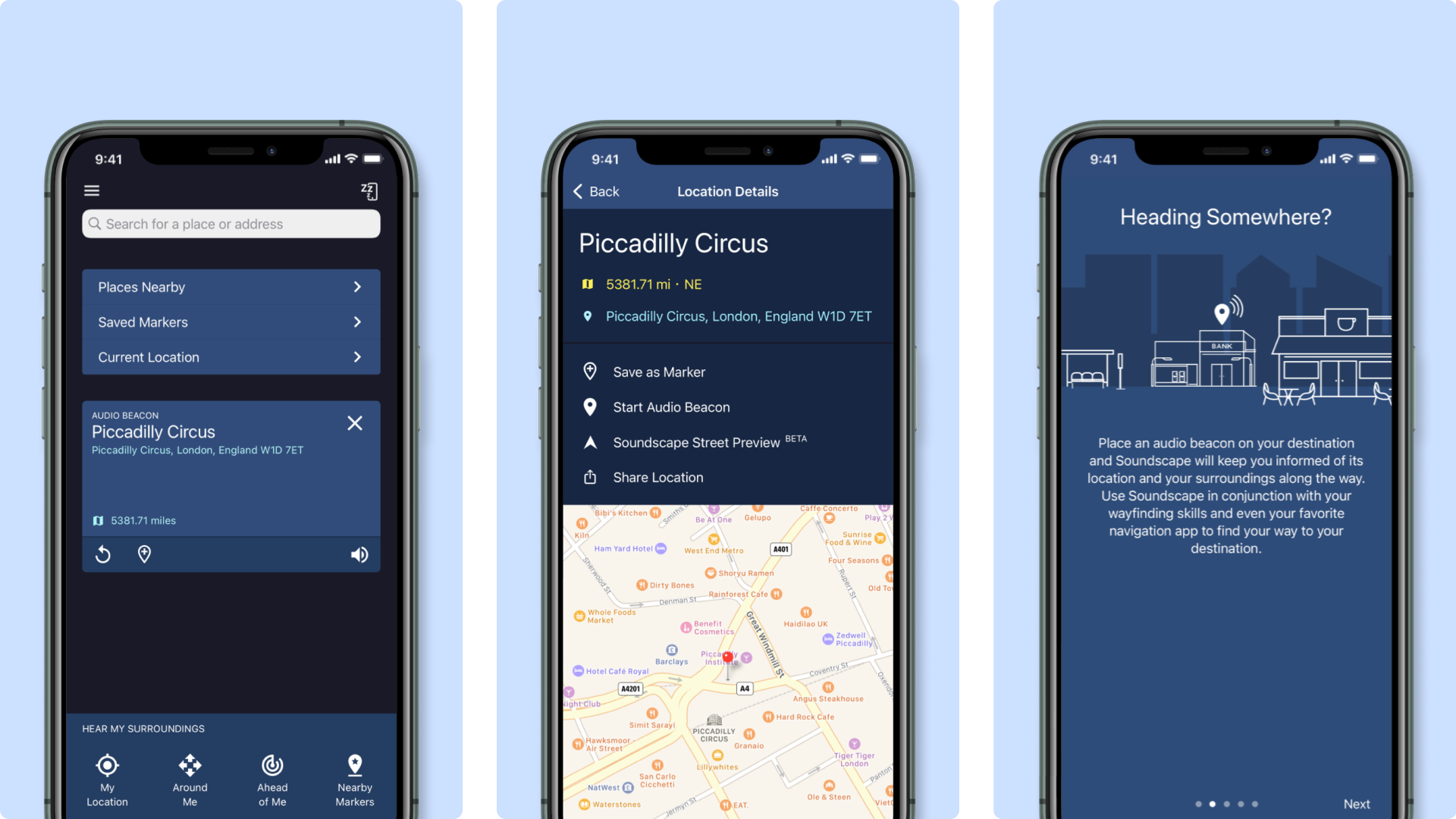
The app leverages 3D sound to offer a new perspective on familiar environments and make exploring new places easier. Using spatial audio, it highlights nearby points of interest, indicates your direction of travel, and provides guidance toward specific destinations.
Project duration
3 year 4 months (Jan 2017 – Mar 2020)
Role
UX/UI designer, Interaction designer, Graphic designer
Tools
Adobe CC, Miro, Sketch, Trello, Hype 4, HTML+CSS
Keywords
Universal design, lean UX, a11y, VoiceOver, Augmented Reality, interactive & accessible prototypes, User research, concept testing, usability testing
Challenge
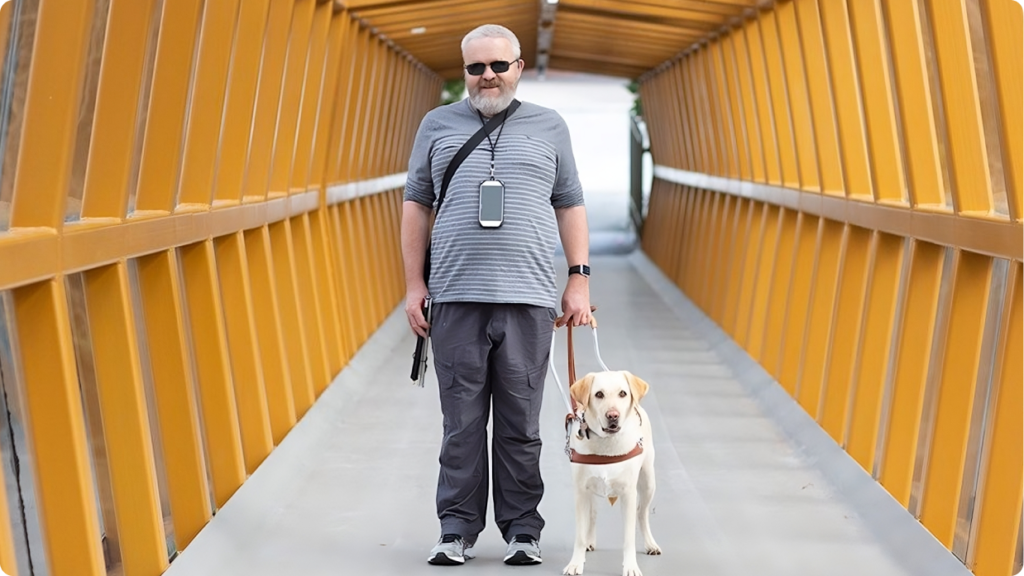
People with blindness struggle to create mental maps of their surroundings
The lack of visual input complicates understanding the spatial relationships between different elements and places in the environment.
Furthermore, individuals with low vision or blindness cannot depend on visual cues like signs and landmarks to navigate.
Goal
Design an app that facilitate people with blindness to perceived elements around them
Despite there are tools such as Google Maps that offer point-to-point navigation, they do not facilitate the development of a comprehensive mental map of the environment.
Design process
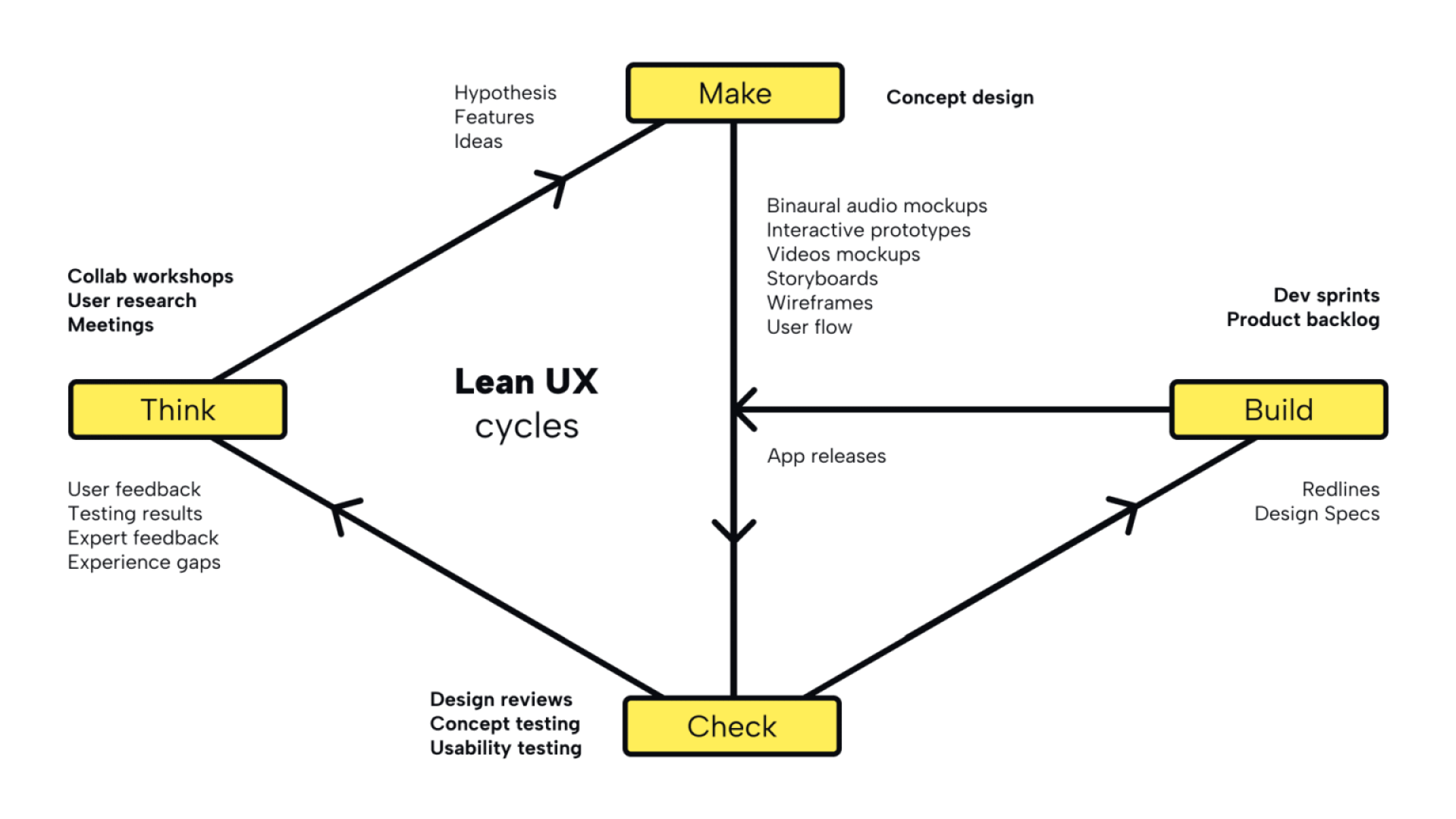
Lean UX framework
The design process followed a Lean UX design process. Different techniques and tools were used to transform ideas or hypothesis into concepts and features. Here are some examples.
Think phase
Mapping the user experience
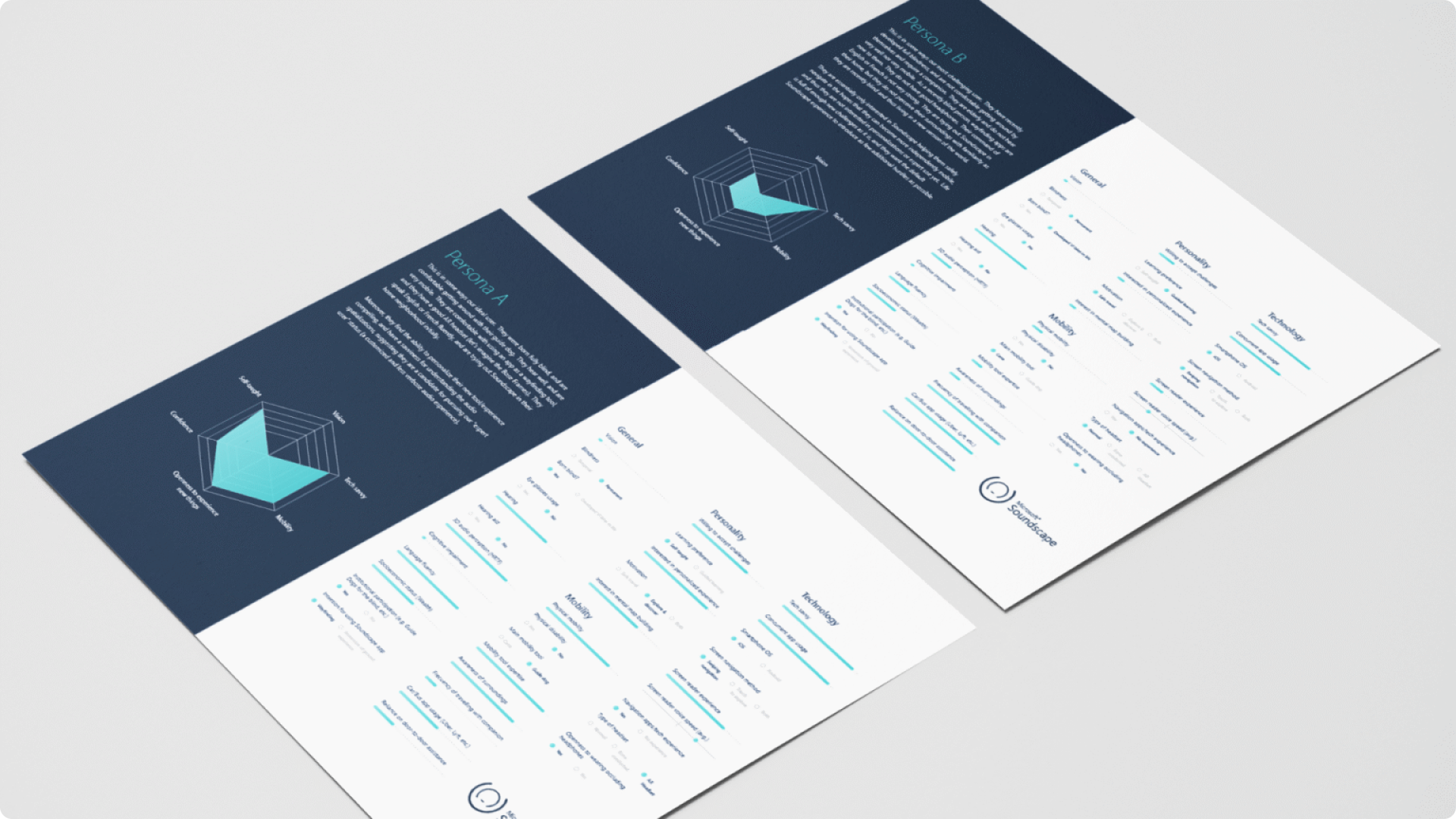
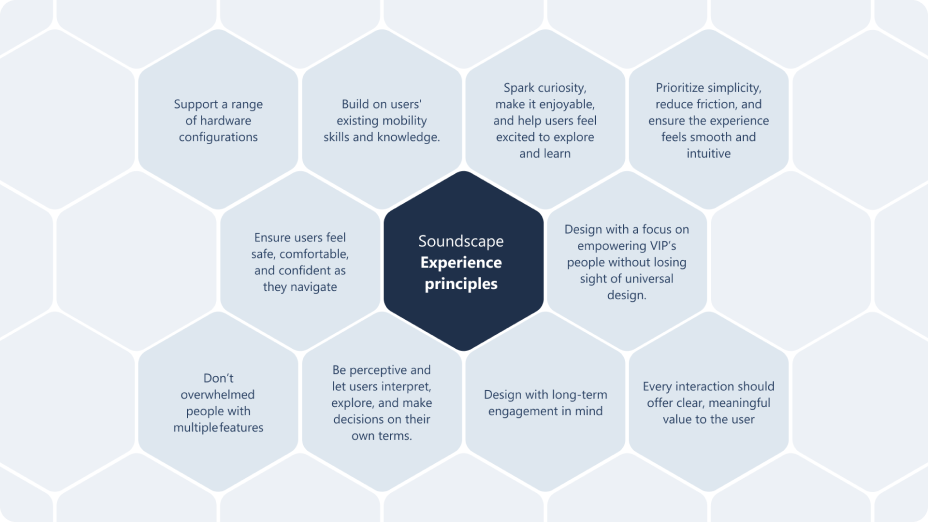
The Soundscape team consisted of individuals with diverse backgrounds. The first step was to listen to the different perspectives about the project. Ideas, concerns, limitations, etc.
Under the guidance of Arturo Toledo from Pixelspace, these conversations took shape. I analyzed, and documented key insights.
We iterated multiple times to find the right balance between contextual information, the app’s sound elements, and the physical environment. We considered scenarios such as walking along a street, utilizing public transport, or being indoors during the experience.
Think phase
ONE concept and audio-based augmented reality
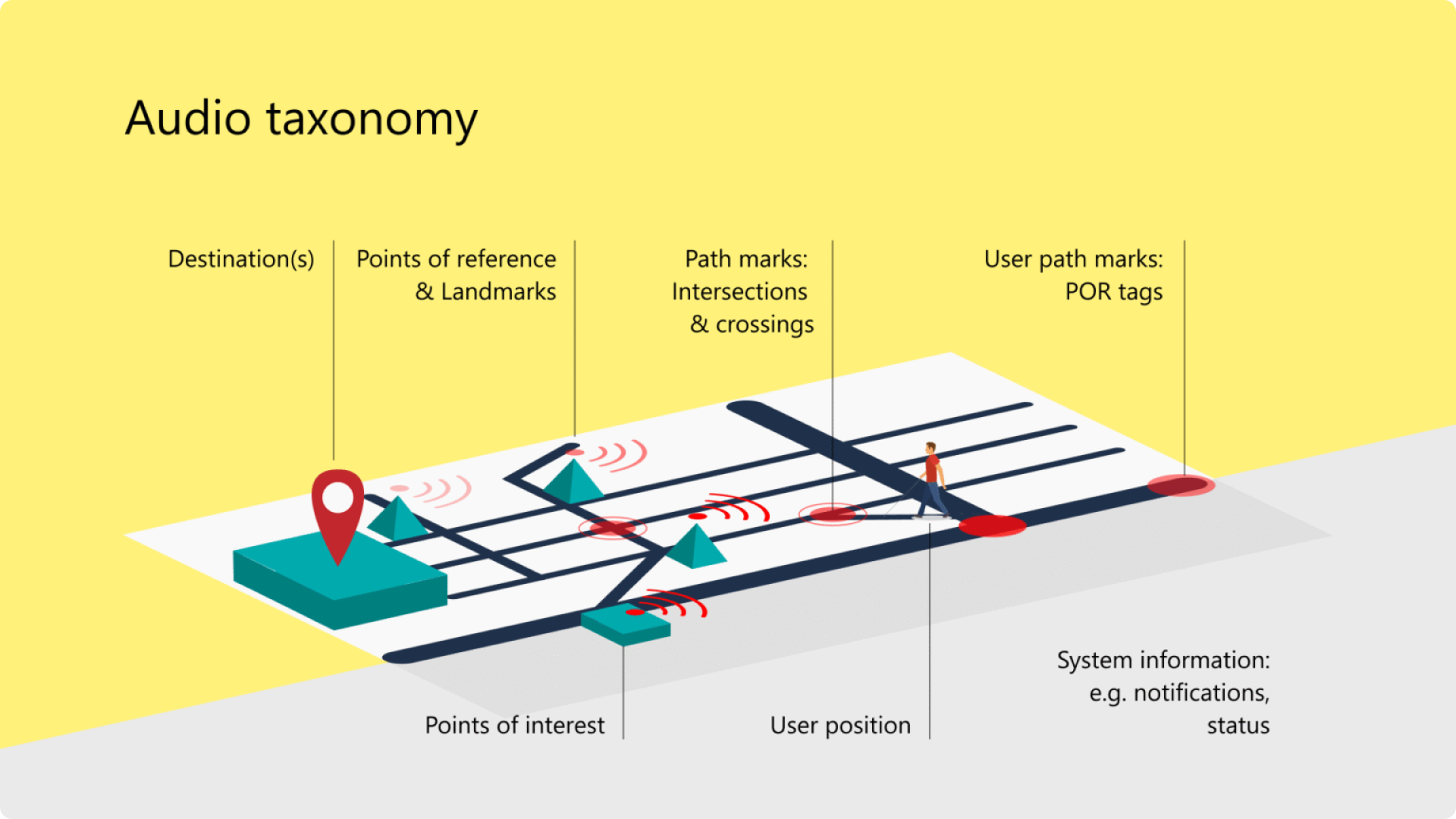
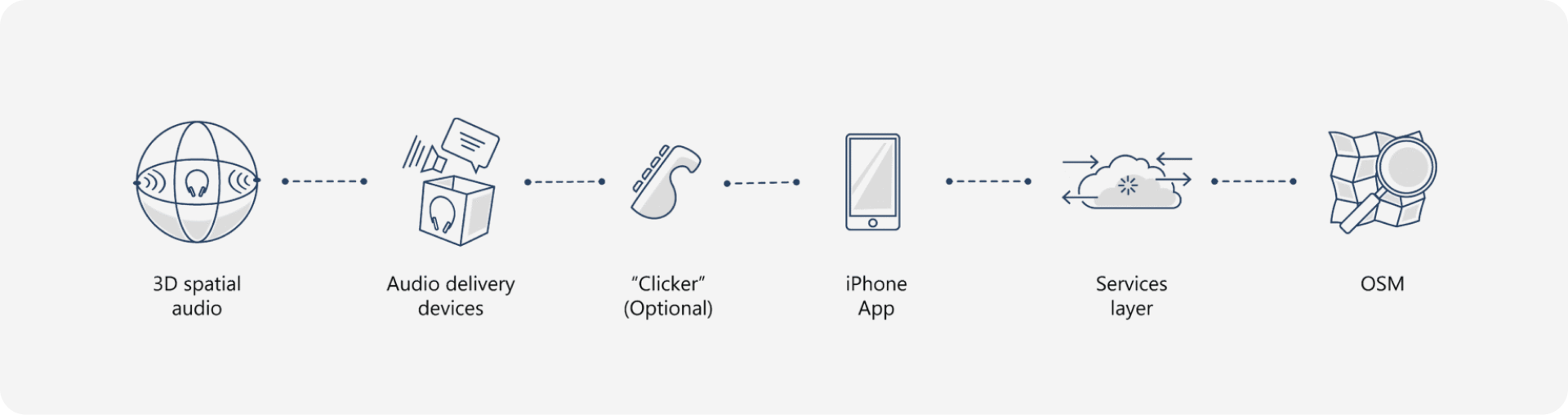
One of the first challenges in the project was to have a good understanding the elements of the experience. The Microsoft research team came up with the ONE concept: Orientation Navigation and Exploration.
ONE components
- User’s position
- Direction
- Landmarks
- Points of reference
- Destination
- Waypoints
- Points of interest
- Surroundings
Orientation sources
- OpenStreetMaps
- Soundscape itself
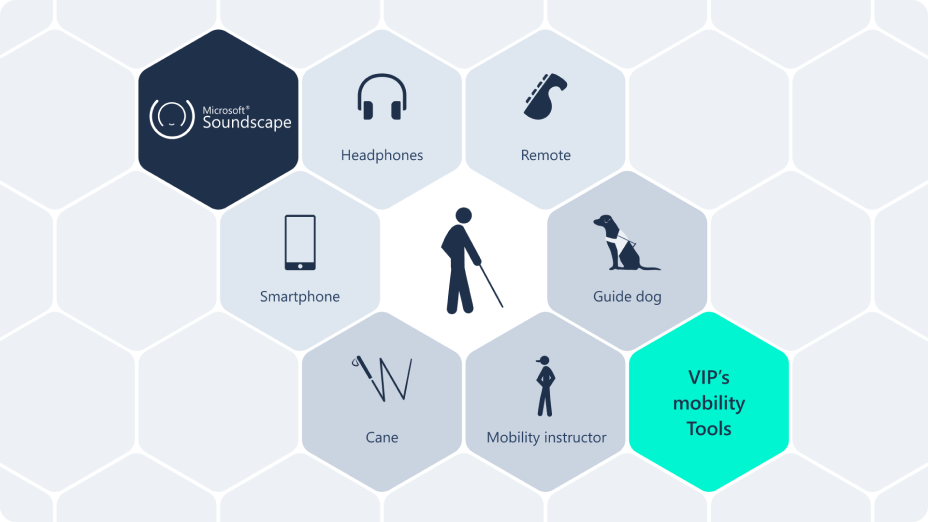
- Mobility instructors
- Family and caregivers
Make phase
Designing audio-based AR concepts
Different techniques and tools were used to transform ideas or hypothesis into concepts and features. Here are some examples.
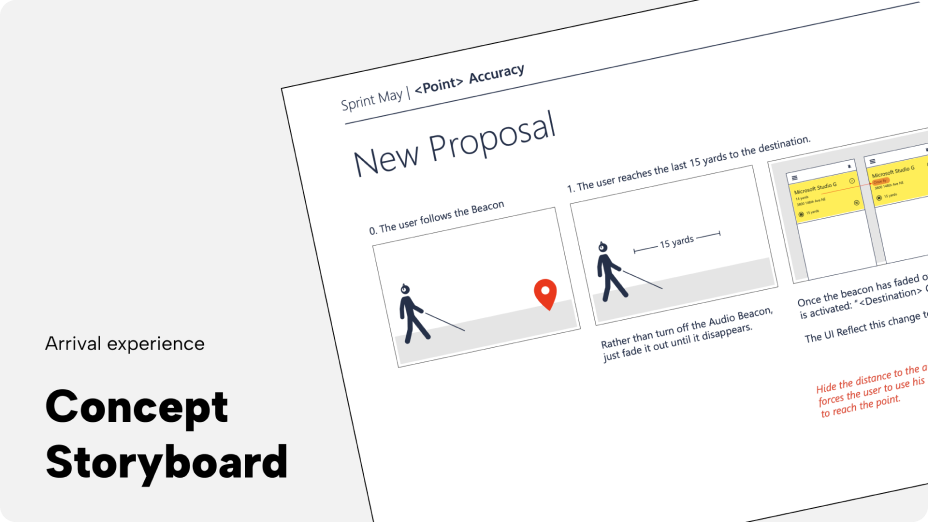
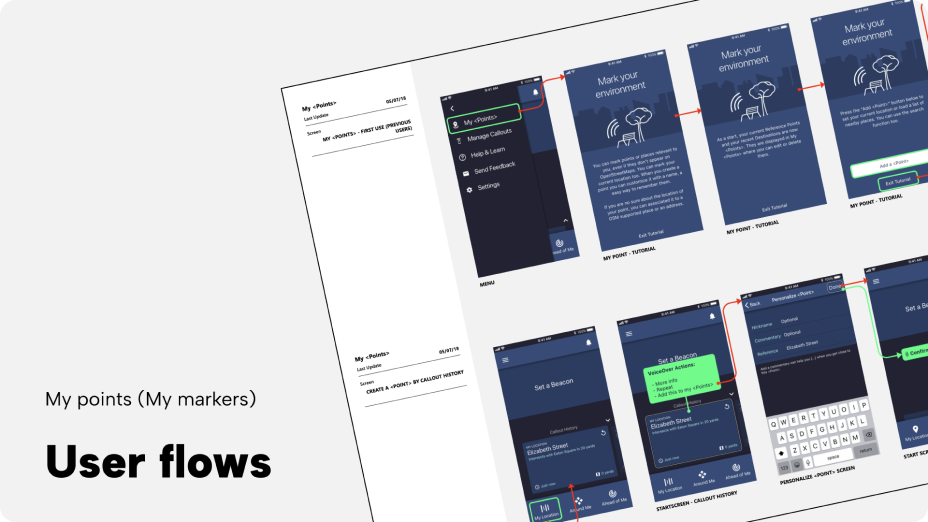
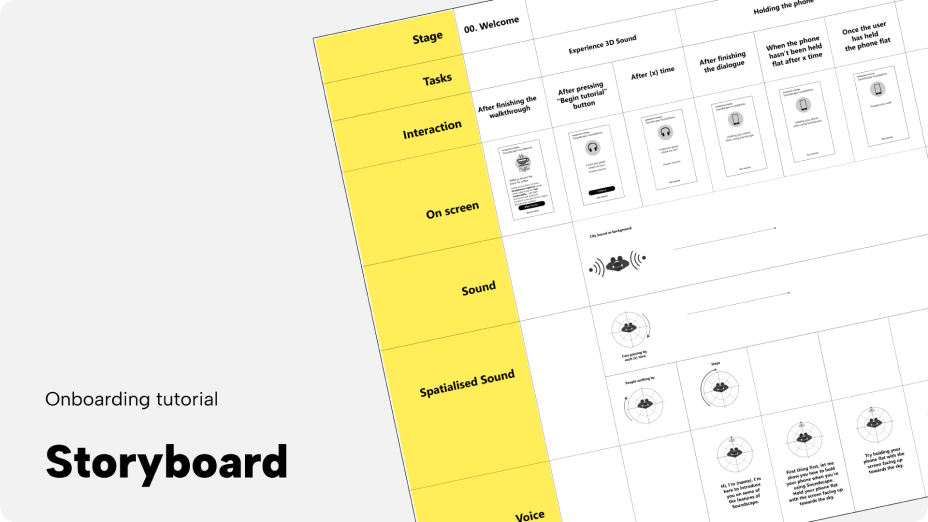
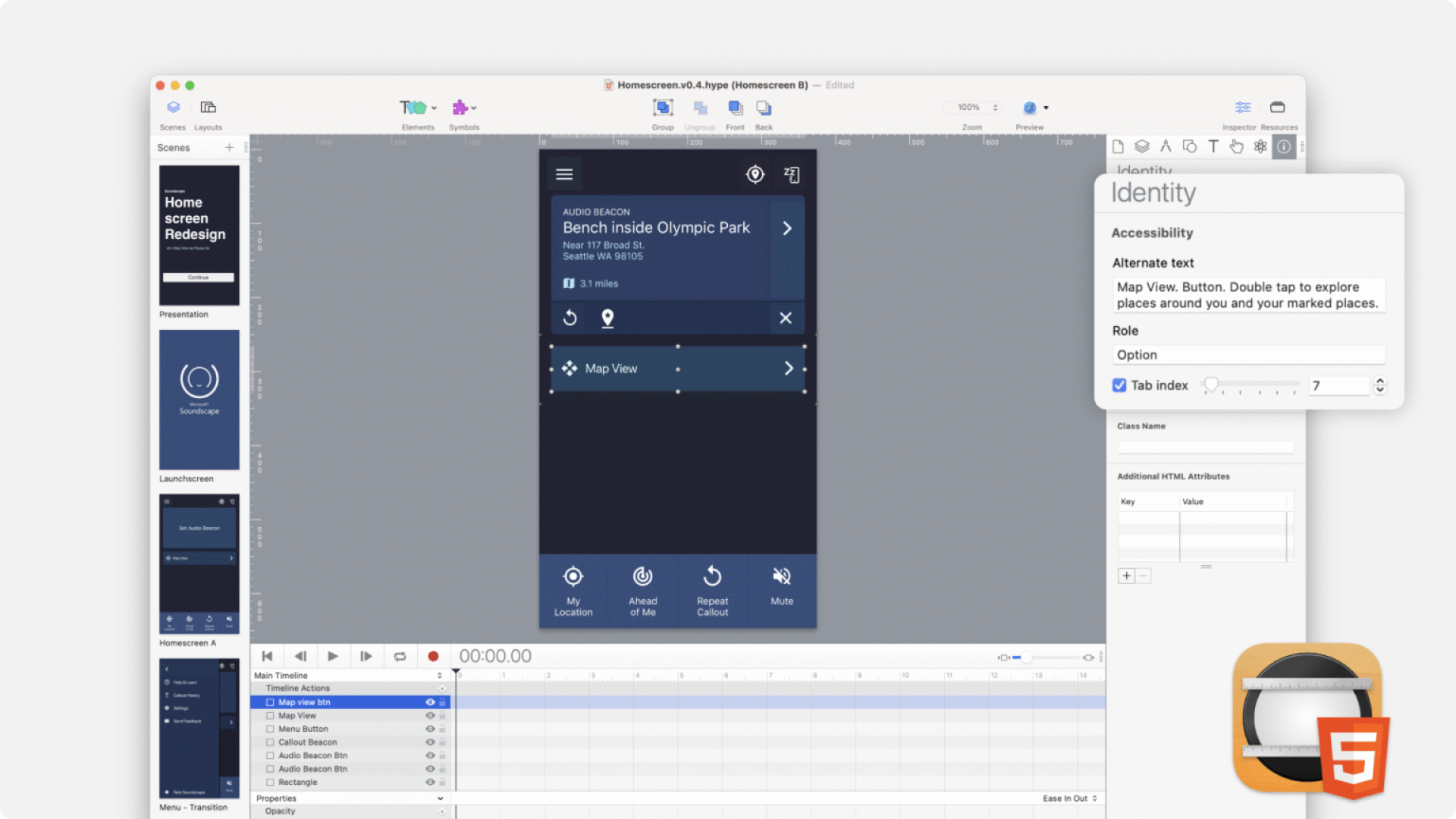
Prototyping tools are unable to work correctly with iOS VoiceOver, even nowadays. However, I knew HTML and ARIA properties could be an option since I created websites from scratch in the past. To symplify the process, I used tumult Hype 4.
Check phase
Testing Audio-based AR experience concepts
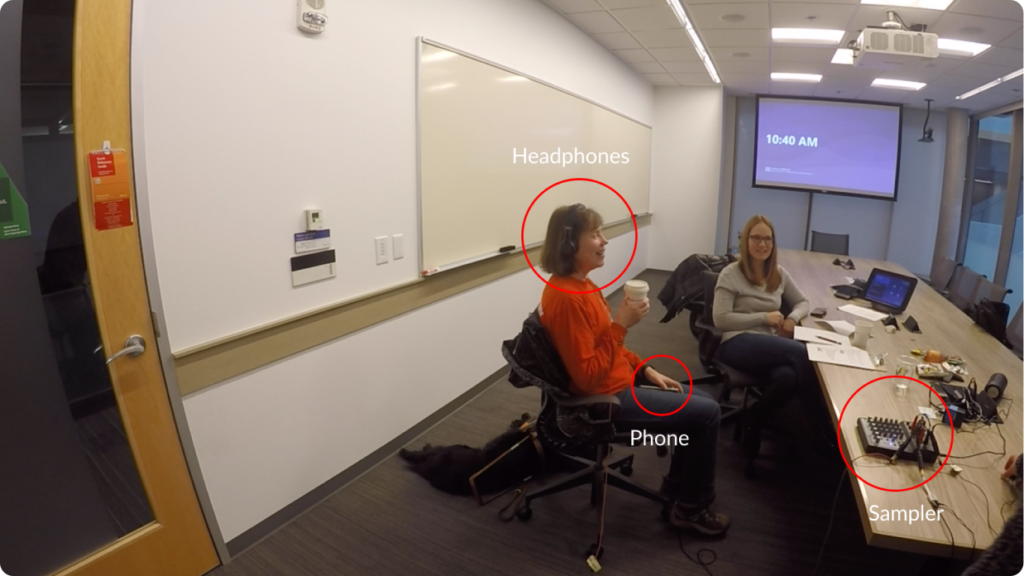
I created binaural audio to test the 3D audio experience and connected the phone to a sampler. So, when users interacted with a UI element, such as a button, with the sampler, the team manually reproduced the specific audio directly to the headphones.
Check phase
Usability testing
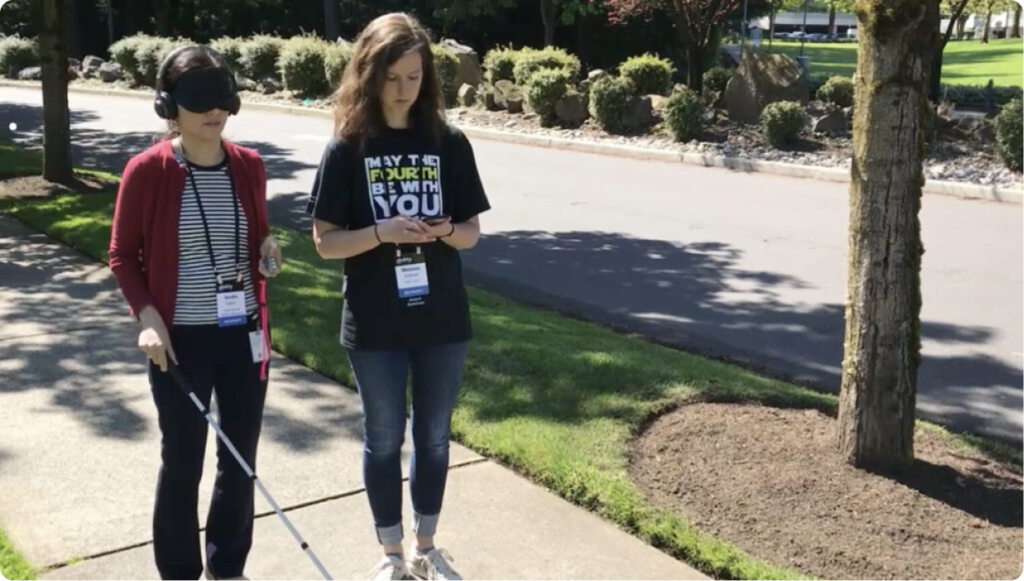
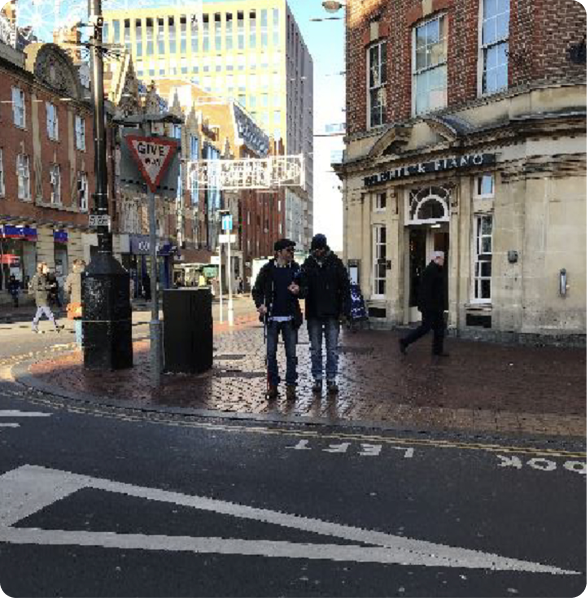
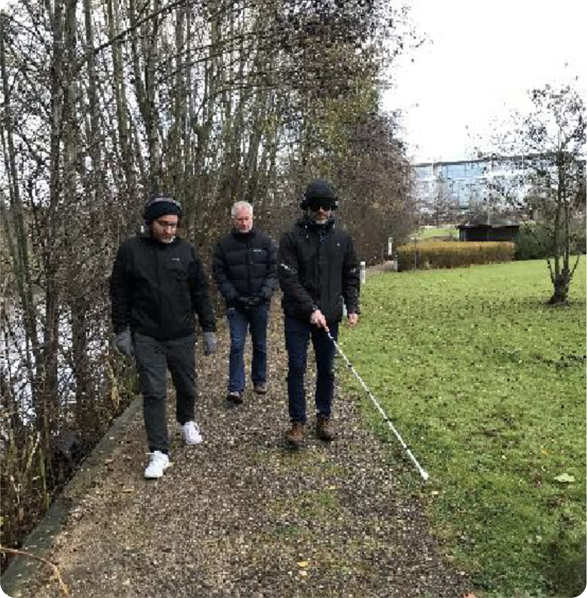
I was involved in the research plannings, but usability testing were ran by the Microsoft Research team with the help of different organizations. The team also used events to showcase the project and get more insights.
New features, and adjustment on the experience came from user’s feedback.
Public launch
The Soundscape app was launch in 2019, in three initial countries: UK, US and Australia. More contries were added during that year.
Launch
Public reception
Microsoft Soundscape had positive reception, receiving praise from users and reviewers. New feedback were received as well.
However, Microsoft discontinued support in 2022, transitioning the technology to an open-source project. Fortunately, the Soundscape Community, including former team members, continues to develop and improve the platform.
Check other projects
MyRX platform
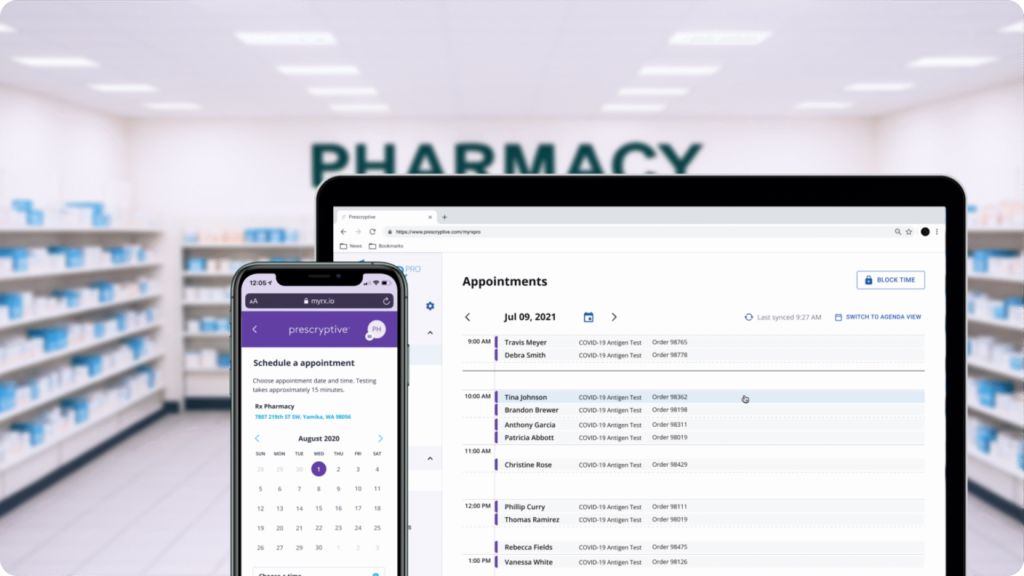
During the COVID lock down, myRX enabled remote scheduling of COVID tests and vaccines to reduce the spread of the virus.
Content Lab
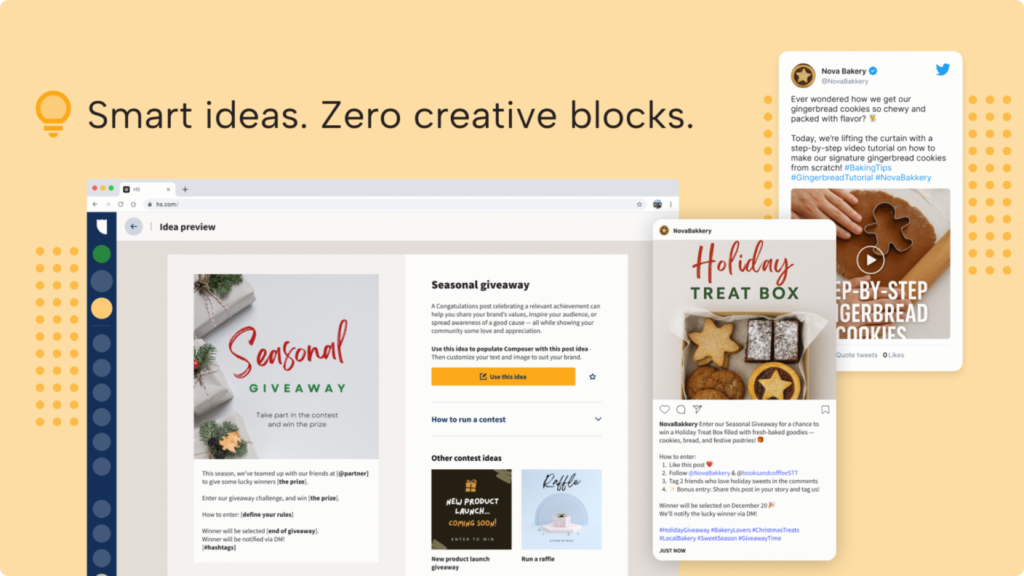
Tool to inspire content creation to reduce the complexity of constantly posting on social media while increasing online presence.